
The Research problem
Mental health conditions affect approximately 970 million people worldwide, yet treatment access remains severely limited. WHO data shows 71% of individuals with psychosis receive no professional support. This gap is most severe in low-income countries, where it perpetuates cycles of poverty and represents a pressing global health equity challenge..
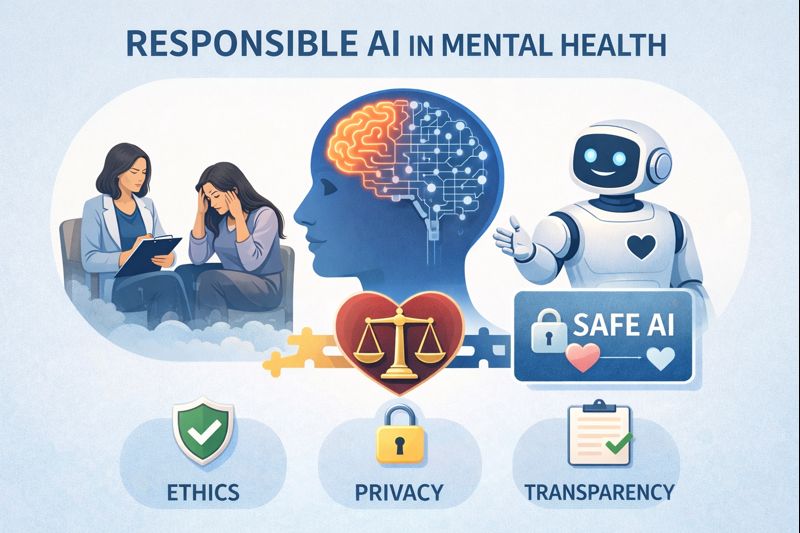
Artificial intelligence (AI) has the potential to address mental health workforce shortages. However, without proper guidelines , AI deployment can cause harm. Patients raise concerns about privacy, safety, and accountability in AI-based care. Current AI tools reflect their training populations—mainly from high-income, English-speaking countries. When deployed elsewhere, they lack cultural sensitivity and fail to meet diverse expectations for responsible AI.
While general ethical guidelines exist for AI, none are specific to mental health-specific or provide comparative analysis essential for globally applicable yet locally relevant frameworks. No research has systematically developed operational AI guidelines for mental health across diverse cultures. Without cultural tailoring, we risk widening mental health disparities. This project moves beyond general principles to generate evidence-based, culturally sensitive operational frameworks for responsible AI deployment in mental health support. Rather than imposing definitions, we build frameworks through direct engagement with service users, caregivers, clinicians, policymakers, and tech developers across economic and cultural contexts.
Research Design
Using mixed methods, we will: 1) conduct a systematic review and meta-analysis identifying barriers to responsible AI implementation across cultures; 2) engage diverse stakeholders (service users, caregivers, clinicians, policymakers, and technology developers) across seven countries (Ghana, South Africa, China, the UK, the Netherlands, Australia, and Canada) spanning five continents to explore culture-specific expectations; 3) synthesize findings into culturally adapted operational guidelines.
This project aims to develop evidence-based, culturally sensitive operational guidelines for responsible AI deployment in mental health care. Through WUN’s global network, the project enables engagement with diverse populations and healthcare systems across multiple continents, ensuring the resulting guidelines reflect varied cultural contexts rather than imposing Western-centric standards. This framework will enable healthcare systems worldwide to harness AI capabilities while maintaining ethical standards and cultural sensitivity.