
The Research Problem
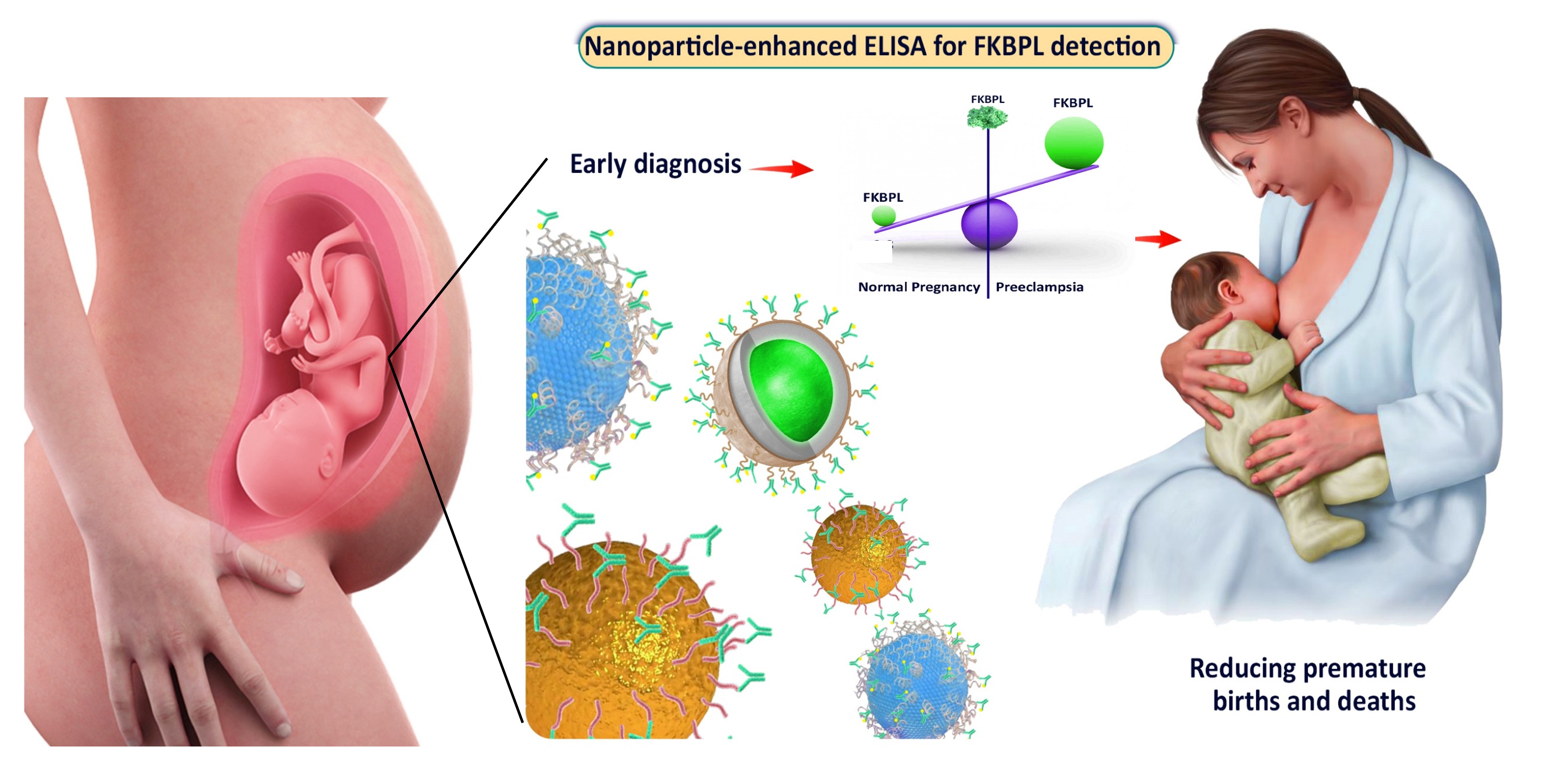
Preeclampsia remains a major cause of maternal and fetal mortality worldwide, especially in low-to-middle income countries due to structural health inequities. Preeclampsia varies geographically and is difficult to diagnose, with current methods being expensive and infrastructure-dependent, mainly detecting early-onset cases. Many local practices use less accurate tools and late screening, delaying diagnosis and increasing risks. This project seeks to improve prediction and diagnosis of preeclampsia through a sensitive blood test for FKBPL, supporting timely monitoring and treatment to prevent complications and deaths.
Research Design
Innovative Detection Methodology
FKBPL is a vital protein involved in developmental vasculature and circulates in the bloodstream at very low concentrations. Principal Investigator McClements’ studies show that FKBPL and its target protein, CD44, can predict and diagnose preeclampsia between 15 and 20 weeks of gestation. However, because FKBPL is less abundant in blood than CD44, it is harder to detect.
To address these limitations, nanoparticle-based immunoassays are being proposed as ultra-sensitive and cost-effective tools for early disease detection. Specifically, the research plans to utilise gold nanoparticles or liposomes to enhance FKBPL detection.
Nanotechnology Advantages
Nanotechnology enables the creation of extremely small materials with unique physicochemical properties, such as a high surface area for antibody binding and signal amplification. These features contribute to improved detection and sensitivity, resulting in medical tests that are significantly more accurate. By harnessing the special properties of nanoparticles in the diagnostic kit, the project aims to enhance the detection of FKBPL, which will support monitoring the risk of preeclampsia and associated pregnancy complications.
Validation and Collaborative Research
The research team will develop a fit-for-purpose diagnostic test and validate it using clinical samples from pregnant women across South Africa, the United Kingdom, and Asia (Hong Kong). Additionally, collaborators in New Zealand will contribute to understanding the role of FKBPL in fetal growth restriction by utilizing human tissues and experimental models.
Project Objectives
The overall goal of the project is to develop a reliable, cost-effective, highly sensitive diagnostic test for preeclampsia that can detect FKBPL in the blood of pregnant women.
Aim 1: Prototype development of a sensitive FKBPL diagnostic test using gold or liposome nanoparticles
Aim 2: Establish the diagnostic utility of the FKBPL diagnostic test across diverse ethnic groups (Asian, multicultural UK and African) and in women with comorbidities.
Aim 3: Elucidate the role of FKBPL in placental and vascular dysfunction in preeclampsia with or without fetal growth restriction
This collaboration, enabled by the WUN’s unique capacity to foster cross-continental research among culturally and geographically diverse institutions, brings together complementary expertise and resources to transform global preeclampsia diagnostics, with a potential to reduce maternal and infant mortality and advance health equity worldwide.
Photo credit: Mr Iman Akbarzadeh