
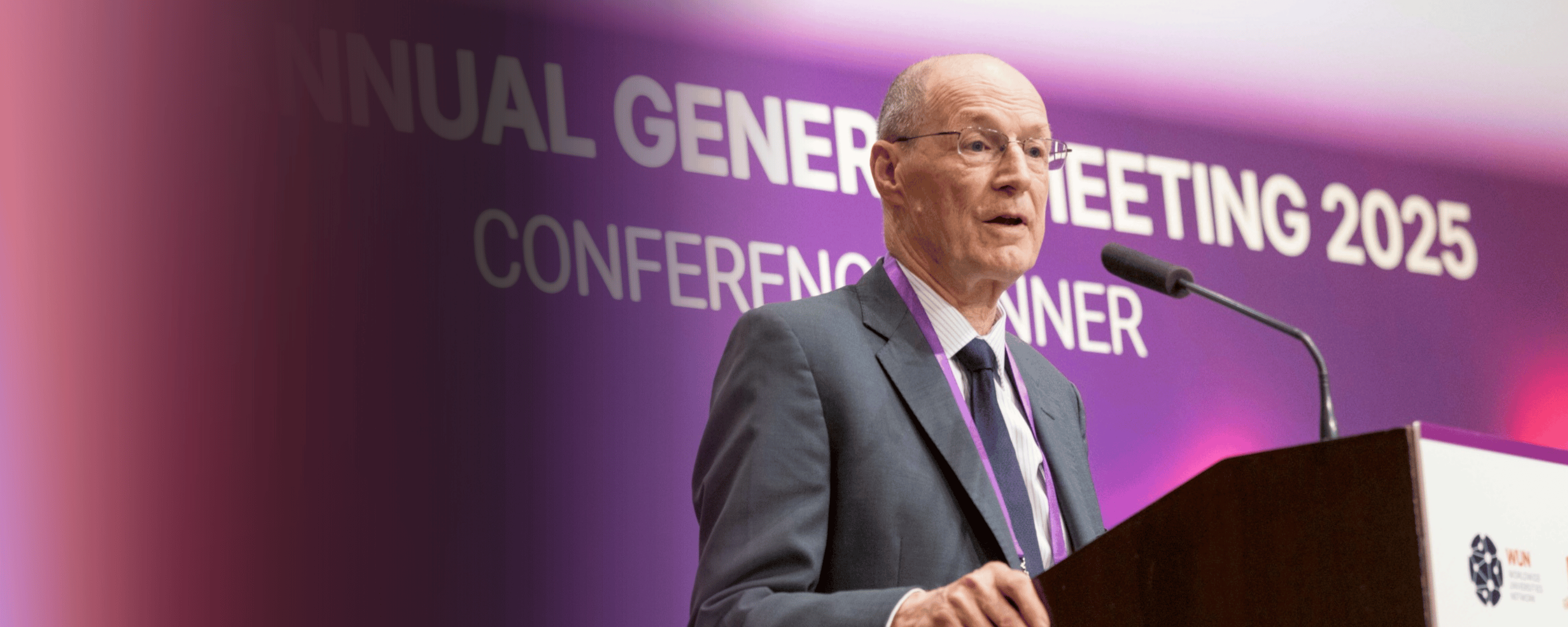
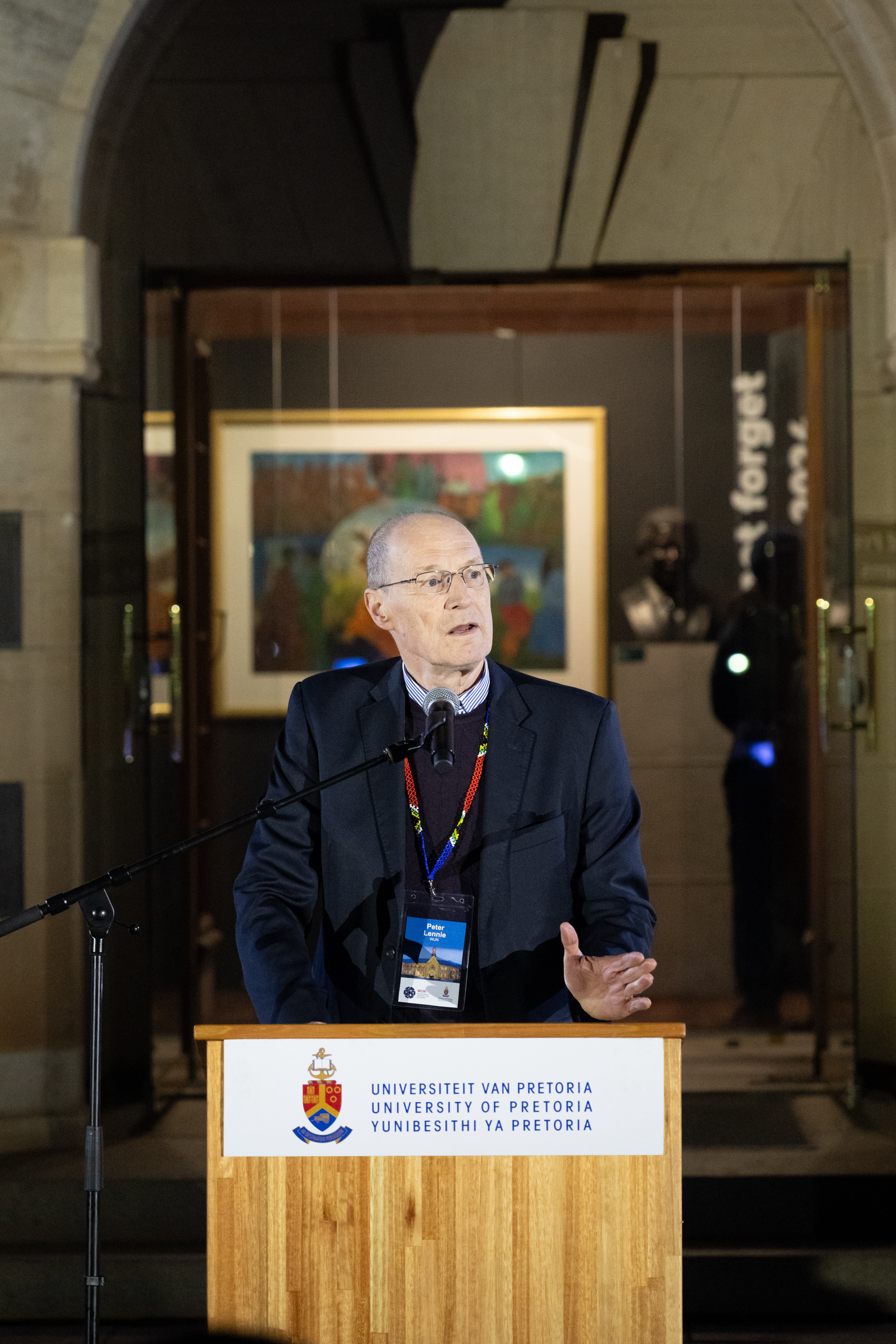
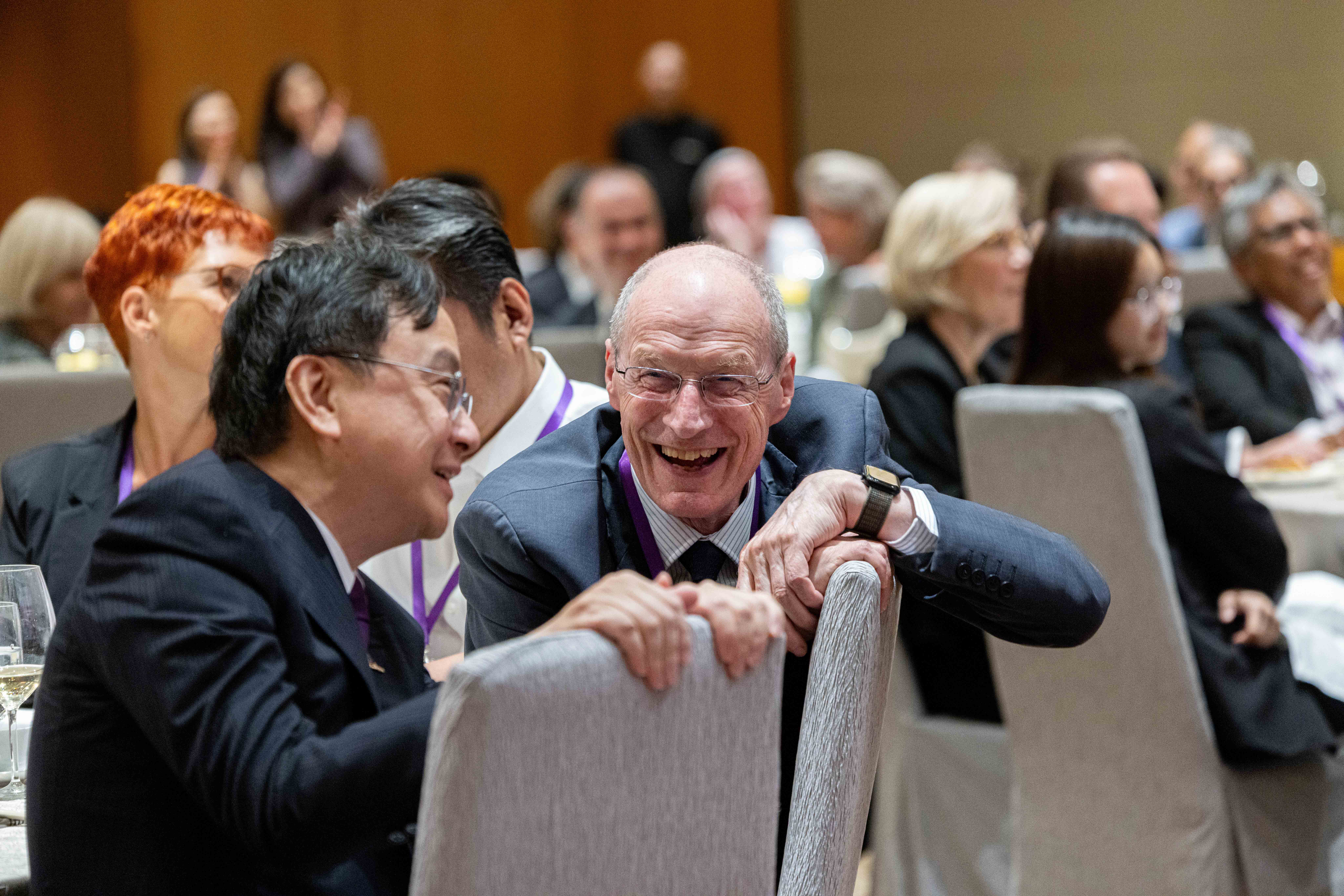
WUN thanks Professor Peter Lennie for his exemplary service as Executive Director (ED) and wishes him a happy and fulfilling retirement. A neuroscientist, Lennie is the Jay Last Distinguished University Professor Emeritus at University of Rochester, where he served as Provost from 2012–2016. His involvement with WUN began in 2012 when Rochester joined the network. He became a member of WUN’s Academic Advisory Group and later the Partnership Board. He was appointed ED in August 2018.
In Lennie’s impactful term, WUN has become a member of the UN’s Sustainable Development Solutions Network, responded to major research universities’ biggest challenges and developed partnerships with the African Research Universities Alliance and the ASEAN Universities Network. WUN has now invested millions of pounds into interdisciplinary research projects to help researchers address problems of global significance.
Professor Bill Flanagan, Chair of WUN’s Partnership Board and President and Vice-Chancellor, University of Alberta, said “Peter has been an exceptional colleague—thoughtful, collaborative, and steadfastly committed to advancing WUN’s mission. His leadership has strengthened the network in profound and enduring ways. It has been a privilege to work alongside him, and I extend my deepest thanks and warmest wishes as he enters this next chapter.”
Dr Mike Hasenmueller, WUN Secretary-General, said, “Peter’s emphasis on collegiality and consultation, his extraordinary understanding of the international higher education and research landscape, and his servant leader approach have been deeply transformative for the network. He has been a genuine gift to WUN and its people.”
Lennie shares his reflections on WUN’s distinctive value, his optimism about the future of research universities and his priorities in the role in this new Q&A to mark his retirement.
What were your priorities when you became ED in 2018?
My top priority was to ensure that WUN focused on problems where the network can make a difference. Major research universities have always been well-connected internationally, so we needed to think hard about where the network adds the most value. The key was to recognize that the varied geographical, cultural and legal contexts in which member universities sit not only shape how they support research and deliver education but also provide them with distinctive perspectives on many important research challenges. WUN’s strength lies in its capacity to capitalize on this diversity in assembling research teams that address problems where comparative analysis matters. A natural focus and key priority would therefore be the universe of the United Nations SDGs (Sustainable Development Goals).
 How has WUN’s value to members and society evolved since you first became involved?
We are more sharply focused on things we’re good at. The Research Development Fund (RDF) supports projects that address the SDGs and that are advantageously tackled by research teams drawn from member universities in different regions. The RDF also now has an explicit emphasis on supporting early-career researchers, who often face obstacles in establishing collaborative networks. These are the areas where we can make a difference.
You mentioned the RDF, now in its 16th year, which has invested over £3.2 million to help researchers from member universities establish projects to address problems of global significance. Tell us about a project which encapsulates the value of international, interdisciplinary research.
There are many, in varied domains. For one that illustrates the value of supporting early-career researchers you can do no better than read Alicia Ndlovu’s account of her project. For a case study on the benefits of sharing special resources, I might pick the project that looked at ways to improve resilience to blast damage. For one that exemplifies the long-term benefits of seed support from WUN I might choose the Global Farm Platform.
During the past few years, WUN has developed collaborations with the African Research Universities Alliance (ARUA) and the ASEAN Universities Network (AUN). How are these collaborations structured and why?
Universities in both regions are undergoing rapid change, and it makes sense for a global network to attend to that, to identify areas of possible collaboration and to help connect WUN member universities with possible future partners. Some collaborative work is already under way, focused on capacity building.
Several WUN RDF-supported projects have investigated Artificial Intelligence across disciplines and sectors. Researchers and universities themselves are navigating new challenges as a result of AI. What sort of governance, regulatory or other measures should universities consider implementing?
Universities are contending with a powerful new force that’s affecting everything they do. Because our member universities are in different environments, their approaches to the challenges will be interestingly varied, and there’s lot to be learned by looking at these. Responsible and ethical use of AI is one of WUN’s research foci; we have also established a working group to examine how AI can help improve university management decisions.
 If you had to describe WUN’s value in only a few words, what would you say?
WUN is the agent for magnifying a member’s strengths through partnership.
Which specific innovations or initiatives in how WUN supports members and international research collaboration are you most proud of?
Giving prominence to the idea that a successful research collaboration depends on being able fully to harness the strengths of every partner. A focus on equitable partnership is always important, but especially so when the partners are differently resourced.
As a passionate “global citizen” are you optimistic about the future of research and its potential contribution to the challenges facing society and the environment, and why?
I am optimistic. There’s a reason that research universities have been around for a long time: they do indispensable things. Right now, they face forces that threaten to undermine their research. I believe this will not last, and that we will see a restored recognition of what universities contribute.
What have you most enjoyed?
I’ve thoroughly enjoyed serving WUN, drawing on my experience as an academic and an academic manager. International research collaboration offers great benefits to society and promoting it has been very gratifying. I’ve also been richly rewarded by my engagement with WUN colleagues—researchers, university administrators and WUN’s Partnership Board—and I’ve been blessed by having Mike Hasenmueller as my deputy. He has made my life better in every way and is the most effective deputy I could have wished for.
What are you looking forward to doing with your time?
I’m looking forward to taking up the cello again; I’ve not played for a long time. I’m particularly looking forward to playing music with others.
WUN’s Partnership Board, Academic Advisory Group, Coordinators, and Secretariat express our thanks and appreciation to Peter and wish him a happy and fulfilling retirement.